
You can have a high nose and slow airspeed and never stall. You can also stall with the nose pointed at the ground. So what actually causes an airplane to stall — and what instrument should you really be watching?
In this video, I break down the one concept that changes how pilots think about stall awareness forever: angle of attack, and why your elevator — not your airspeed indicator — is your only real cockpit cue for it.
I also walk through the demonstration I do with every student: a nose-high, slow-airspeed maneuver that looks like it should stall… but never breaks. Once you understand why, stall recognition will never feel the same.
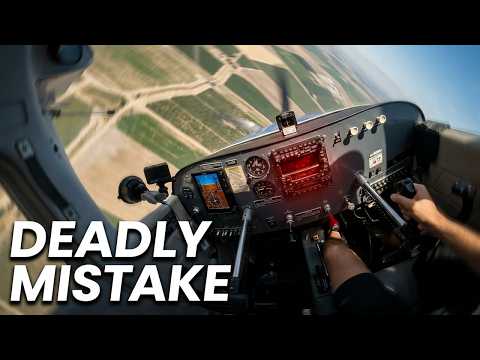
Stall and spin accidents don't make sense. Every pilot is warned about spins from day one of training — and yet pilots keep dying every year. The mistake isn't a lack of knowledge. It's a gap between what we know and what our hands and feet actually do when the wing drops.
In this video, I break down the real chain of events that turns a normal stall into a spin. We teach spin recovery (PARE — Power, Ailerons neutral, Rudder opposite, Elevator forward), but we don't spend enough time teaching pilots to recognize the chain of events and correct for them before it becomes a spin. This video is about closing that gap — so you don't become another statistic.

Most stall accidents don't happen at cruise altitude. They happen in the traffic pattern — at 500 feet AGL, slow, task-saturated, trying to salvage a bad approach.
In this video, we break down exactly how a cross-controlled stall develops, why the natural instinct to tighten the turn with rudder is the most dangerous thing you can do, and what actually keeps you safe.

Stall practice is required to earn your certificate — but are you practicing the right kind of stalls?
Most pilots only practice the textbook ACS maneuvers: coordinated, at altitude, in clean configuration. But the stalls that show up in NTSB accident reports look nothing like that.
In this video, I break down the stall scenarios that actually kill pilots — and give you a practical framework for practicing beyond the standards.
What we cover:
- Why ACS stall practice isn't enough on its own
- The base-to-final cross-controlled stall (the most dangerous scenario in the pattern)
- Departure stalls, accelerated stalls, and stalls in landing configuration
- How to build better stall practice habits that go beyond the checkride
- Why spin training is worth considering
Whether you're a student pilot prepping for your checkride or a certificated pilot looking to sharpen your skills, this is one area of your flying that's always worth more practice.
If you've ever keyed up the mic, gone completely blank, and said something like "uh… Cessna… with you…" — this video is for you. Radio calls are one of the most anxiety-inducing parts of learning to fly. Nobody teaches you a repeatable system. You just kind of fumble through it until it clicks.
In this video, I'm sharing the simple 5-step formula I use with every student I train — one that makes your radio calls smooth, confident, and professional every single time.
What's covered:
- Why most student pilots struggle with ATC communication (and it's not what you think)
- The 5-step formula broken down step by step
- Real examples so you can hear exactly what it sounds like in practice
Whether you're a student pilot working toward your checkride or a certificated pilot who still gets nervous keying up the mic, this formula will change how you communicate in the air.

Every year, weather-related decisions are one of the leading causes of general aviation accidents — and almost all of them share the same root mistake. In this video, I break down the #1 weather error I see student pilots make, why it happens, and exactly how to avoid it before it catches you off guard.
Whether you're in primary training or getting ready for your checkride, this is something your instructor may not have told you directly — but needs to.
What you'll learn:
- The most common weather misjudgment student pilots make
- Why it's so easy to fall into this trap (even with a good briefing)
- The decision-making habit that will protect you every single flight
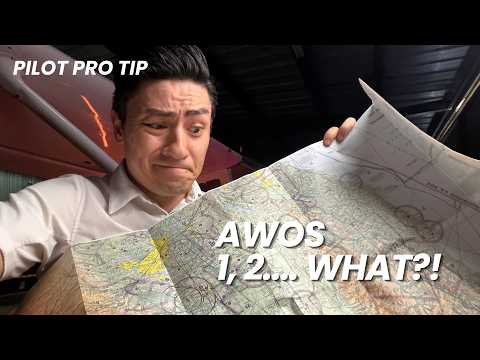
✈️ AWOS-1… AWOS-2… AWOS-3… what do they actually mean? If you’ve ever found yourself trying to memorize AWOS systems before a checkride or while listening to weather briefings, this video gives you a simple way to stop guessing and actually remember the differences.
In this quick aviation tip, we break down:
• The difference between AWOS-1, 2, and 3
• Why it matters for pilots
• An easy memory trick to remember them

Fuel starvation accidents don’t always happen because someone “forgot” to fuel the airplane. Sometimes they happen because pilots slowly convince themselves they can stretch the limits just a little farther.
In this video, I break down a real-world example that shows how sneaky minimum fuel reserve decisions can become — and how quickly “I should still be okay” can turn into a serious situation.
Whether you’re a student pilot, private pilot, or just curious about aviation safety, this is an important reminder that fuel planning is about margins, not optimism. Fly safe. Leave yourself options.

Welcome to Flying With Shawn — a place for aspiring pilots, aviation enthusiasts, and lifelong learners. I’m Shawn, a Certified Flight Instructor based in the San Francisco Bay Area. I'm an aircraft owner passionate about making aviation approachable, practical, and inspiring. Whether you’re dreaming of becoming a pilot, working through training, or just fascinated by flight, this channel is here to help you grow in confidence, knowledge, and skill along the journey.
